

























RNN Group brings defence employers and education partners together to shape future technical skills
RNN Group has brought together defence employers, education partners and higher education representatives for a collaborative event focused on shaping the future of technical skills for the UK defence sector.
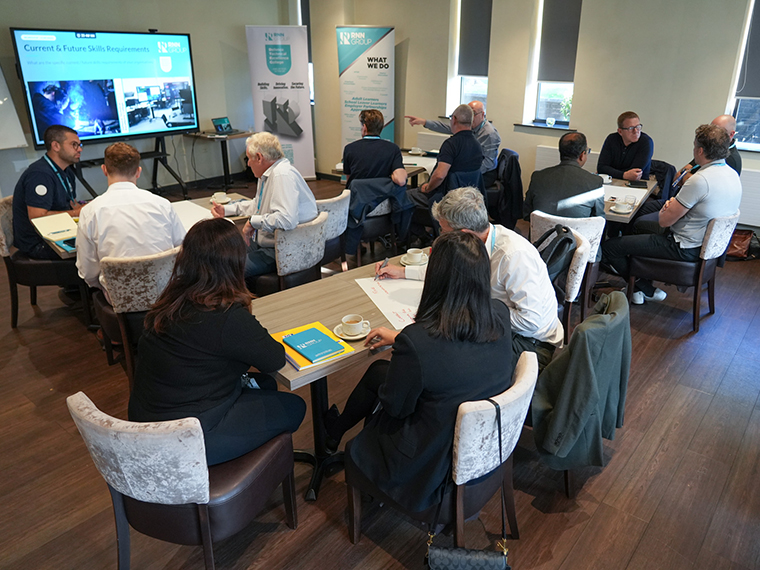
Held on 22nd September as part of the development of the Defence Technical Excellence College (DTEC), the event provided an opportunity for employers and education providers to explore current and emerging workforce needs, identify skills gaps and help shape future training provision.
RNN Group is a national DTEC provider and will act as a regional anchor for defence skills across Yorkshire, Humber and the North East and Yorkshire, working alongside further and higher education partners. The wider DTEC initiative is backed by £175 million of government investment, with an ambition to train more than 65,000 specialists nationally.
Putting employers at the heart of skills development
A key theme of the event was the importance of working directly with industry to ensure that technical education responds to real-world defence requirements.
Employers were invited to identify the specific current and future skills their organisations require, before exploring whether existing training solutions meet those needs and where new approaches may be needed.
Workshop discussions highlighted strong demand for skills including Digital Twin modelling, CAD/CAM, artificial intelligence integration, cyber resilience, and robotics and automation maintenance.
Participants also identified the importance of workforce standards and readiness, including security clearance, nuclear and defence quality standards, and technical compliance.
These discussions will feed into a more detailed skills-mapping exercise involving Tier 1-3 employers, helping to establish a clearer picture of the technical competencies required across the defence supply chain.
Exploring new approaches to technical training
The event also examined how training could become more flexible and responsive to the pace of technological change.
Employers highlighted demand for accredited short courses and Level 4-6 micro-credentials, offering an alternative to traditional three-year degree programmes and allowing existing workforces to develop specialist skills more rapidly.
There was also strong interest in shared access to specialist facilities, including robotics, drone testing and advanced fabrication environments. This aligns closely with the facilities being developed through RNN Group’s DTEC hubs.
At University Centre Rotherham, the expanded Regional Defence Hub will bring together technical education, applied innovation and industry recruitment, with facilities focused on digital and cyber skills, autonomous systems and immersive cyber training. The hub will also include an Esports Hub designed to support progression into defence-relevant drone piloting and unmanned systems operations.
At RNN Group’s Rotherham campus, plans for an Advanced Manufacturing Lab will create an Industry 4.0 training environment reflecting a modern defence factory. Facilities will cover automation and mechatronics, CAD/CAM and additive manufacturing, advanced composites and welding, and non-destructive testing and quality assurance. A dedicated Under 25kg Drone Hub will also provide practical experience in flight planning, cargo logistics, aerial surveillance, automated payload delivery and tactical drone operations.


Tackling the barriers to skills development
Open discussions during the event also focused on the practical barriers employers face when trying to develop new skills. Among the issues identified were limited staff release time for upskilling, the rapid pace of change in defence technology and challenges around retaining specialist talent. Potential solutions included flexible hybrid and online delivery, employer-led guest lecturing and co-funded apprenticeship levy transfer options.
The approach reflects DTEC’s wider ambition to create a strong partnership between employers and education providers, with employers helping to shape curriculum, provide industry experience and contribute to innovation and workforce development.
Building a regional defence skills ecosystem
By 2030, DTEC aims to establish a sustainable hub-and-spoke network supporting defence and dual-use technology skills across South Yorkshire and the wider UK.
The programme aims to support more than 2,500 learners and employees, engage more than 200 employers, create over 500 industry placements, live projects and work-based learning opportunities, and expand higher technical provision from Levels 2-6.
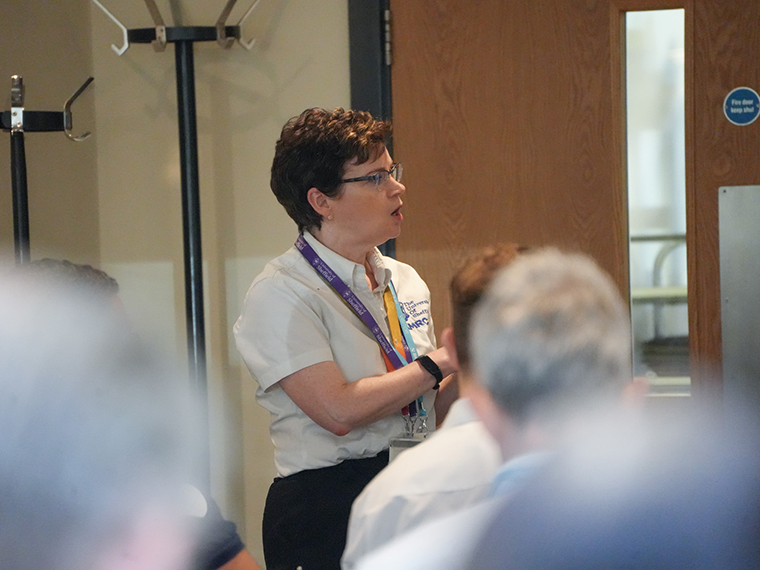
The University of Sheffield AMRC Training Centre is among the education partners involved. Its contribution includes specialist engineering and manufacturing apprenticeships, while future areas of focus include increasing degree apprenticeships, developing high-level technical competencies in advanced manufacturing and expanding machine learning programmes at higher levels.
Looking ahead
The 22nd September event marks an important early stage in the mobilisation of DTEC, with the programme’s 2026-27 goals including establishing its governance structures, beginning capital investment across hub and spoke partners, developing the initial specialist curriculum and engaging at least 350 learners and 40 employers. The programme is also targeting 50 industrial placements and £100,000 of employer co-investment during 2026–27. The next phase will see curriculum co-design work begin in November, followed by a strategy group review in January 2027 and a full DTEC Hub rollout and employer progress review planned for April 2027.
Employers are being invited to continue contributing through the DTEC Strategic Review Group and sector workstreams, with the next sector workstream session planned for mid-November 2026 and focused on curriculum co-design.
The event demonstrated the central role of collaboration in the DTEC vision: Bringing employers, colleges and universities together to ensure that the future defence workforce has the specialist technical skills needed to support innovation, resilience and the UK’s defence capability.