























AI-Driven Job Applications: The Dos and Don’ts Every Jobseeker Should Know
Is AI helping you get a job – or getting in the way?
Artificial intelligence is changing the way we search and apply for jobs.
From writing CVs and covering letters to preparing for interviews, AI tools can save time, help you identify your strengths and give you ideas for improving your applications.
But there is an important distinction between using AI to support your job search and letting AI do your job search for you.
Employers are increasingly using automation and AI throughout recruitment. Some systems can analyse CVs, identify skills and keywords, rank candidates and even support online assessments. The UK’s Information Commissioner’s Office (ICO) reported in 2026 that 70% of employers surveyed by the Institute of Student Employers expected to increase their use of AI and automation in recruitment over the following five years.
That means jobseekers need to understand both sides of the process.
AI can be a powerful tool – but your application still needs to sound like you.
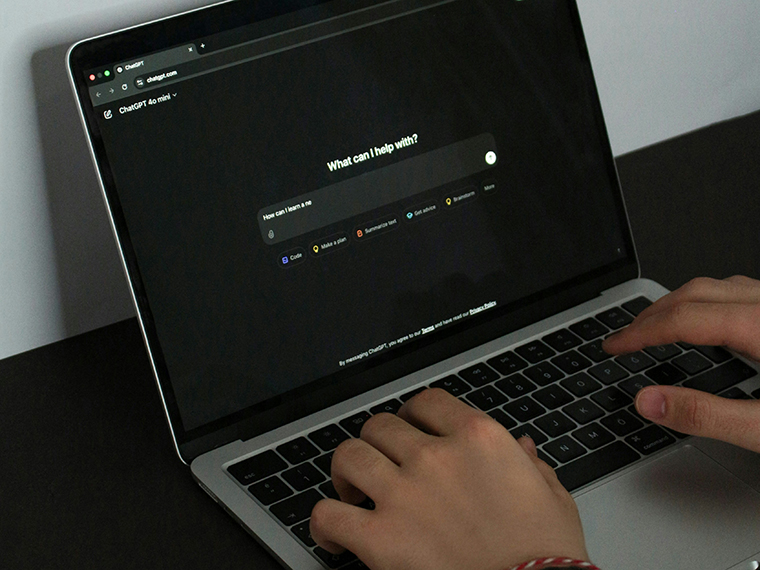
What does an AI-driven job application look like?
AI can now play a role at almost every stage of applying for a job.
You might use AI to:
- Find suitable vacancies
- Analyse a job description
- Identify important skills and keywords
- Improve the structure of your CV
- Check spelling and grammar
- Generate ideas for a covering letter
- Prepare answers to competency questions
- Research an employer
- Practise interview questions
- Prepare for online assessments
At the same time, employers may be using AI and automated systems to screen applications.
An Applicant Tracking System (ATS) can scan CVs for relevant keywords and help employers manage large numbers of applications. This makes it particularly important to tailor your CV to the specific vacancy rather than sending exactly the same document to every employer.
So how can you use AI effectively without losing the human element?
The DOs of using AI for job applications
DO use AI as your career assistant – not your replacement.
Think of AI as a tool that helps you improve your application.For example, you could ask AI to review a job description and identify the key skills the employer is looking for. You can then decide which of those skills genuinely apply to you and make sure your CV demonstrates them. This is much better than asking AI to “write me a CV” and submitting whatever it produces.
The National Careers Service recommends tailoring your CV to each role and highlighting the skills and experience relevant to the vacancy.
DO tailor every application
One of the biggest mistakes jobseekers make is creating one generic CV and sending it everywhere. AI can help you compare your CV with the job description and identify areas that you may want to strengthen. But make sure the final decisions are yours.
DO use AI to improve your CV structure
AI can be useful for suggesting ways to make your CV clearer, more concise and easier to read. However, don’t allow it to invent achievements or turn straightforward experience into exaggerated claims.
A good CV should clearly communicate:
- Your skills
- Your qualifications
- Your experience
- Your achievements
- Your relevant volunteering or work experience
- What you could bring to the employer
The National Careers Service recommends clear formatting, headings, bullet points and concise information.
DO use the right keywords – honestly
Keywords matter because an ATS may scan your application for skills, qualifications and terminology contained in the job advert.
If an employer asks for customer service, Microsoft Excel, project management and communication skills, and you genuinely have those skills, make sure they are clearly represented in your CV.
But don’t simply fill your CV with keywords. Never claim a skill you don’t have just because AI tells you it might help you pass an ATS. Your CV needs to survive the human review that can come after the automated screening.
DO use AI to practise interviews
This is one of the most useful applications of AI. Give an AI tool the job description and ask it to generate realistic interview questions.
You can then practise answering questions such as:
- “Tell us about yourself.”
- “Why do you want this role?”
- “Tell us about a time you worked as part of a team.”
- “Describe a situation where you solved a problem.”
- “Tell us about a time you dealt with a difficult customer.”
DO check everything AI produces
AI can sound extremely confident while being completely wrong. It is a common misconception that people view as AI as fact or absolute truth – but that is not the case!
It can misunderstand your experience, invent information or exaggerate your achievements.
Always check:
- Dates
- Job titles
- Qualifications
- Company information
- Statistics
- Skills
- Achievements
- Spelling of names
- Claims about your experience
Government JobHelp guidance also recommends checking AI-generated content carefully and ensuring that applications remain accurate and truthful.

And now the DON’Ts of using AI for job applications
DON’T copy and paste an AI-generated application
This is perhaps the biggest rule. AI-generated applications can sound polished – but they can also sound generic, repetitive and strangely impersonal. Recruiters want to understand you. Many roles require a personality and this will not come through on an AI driven application.
Use AI for ideas, structure and feedback and then write the final version in your own voice.
DON’T let AI invent experience
Never ask AI to make you sound “more experienced” if you aren’t. Don’t turn: “I helped my team organise stock” into: “I successfully led a strategic inventory optimisation programme.”
If you didn’t do it, don’t claim it. An interview can quickly expose an achievement that isn’t genuine.
DON’T put sensitive personal information into AI tools
Think carefully about what information you enter into an AI system.
Avoid unnecessarily sharing:
- Your home address
- Personal telephone numbers
- Personal email addresses
- National Insurance information
- Passport or identity information
- Financial information
- Confidential information about an employer
- Other people’s personal information
DON’T ignore an employer’s AI policy
This is extremely important. Some employers may allow or encourage the use of AI. Others may restrict it or specifically state that certain parts of an application must be completed without AI assistance.
If an employer says that AI must not be used for a particular assessment or application question, don’t use it. Ignoring the instructions could result in your application being rejected.
DON’T assume AI knows what the employer wants
AI can analyse a job advert, but it doesn’t know everything about an organisation. It may not understand the employer’s culture, current priorities or what a particular hiring manager values. You need to do your own research: visit the organisation’s website, read about its values and understand what the role actually involves.
Final thoughts: Use AI wisely
AI is changing the job market, and it is likely to become an increasingly familiar part of recruitment. That doesn’t mean jobseekers should avoid it.
Learning how to use AI responsibly and effectively is becoming an important digital skill. Use it to brainstorm, research, practise, identify and improve your spelling and structure, but don’t let it replace your personality or experience…. or you!
Whether you’re applying for your first job, looking for an apprenticeship, changing careers or taking your next step after college or university, developing your digital and employability skills can give you greater confidence in today’s changing job market.