



















Careers and Skills Week: Building the Skills for Your Future
Next week is Careers and Skills Week at RNN Group, and it’s a great opportunity to think about where your course, your skills and your experiences could take you in the future.
There will be plenty happening across our campuses, including careers events, employer activities, workshops and opportunities to speak to people from different industries.
But Careers and Skills Week isn’t just about finding out what job you might want to do.
It’s also about understanding what employers are looking for and recognising the skills you are already developing.
Qualifications are important – but so are your skills
When you’re studying, it can be easy to think that your qualification is the main thing an employer will be interested in.
Of course, your knowledge and qualifications matter. But employers also want people who can communicate, solve problems, work with others, manage their time and adapt when things don’t go according to plan.
These are often called Power Skills or transferable skills.
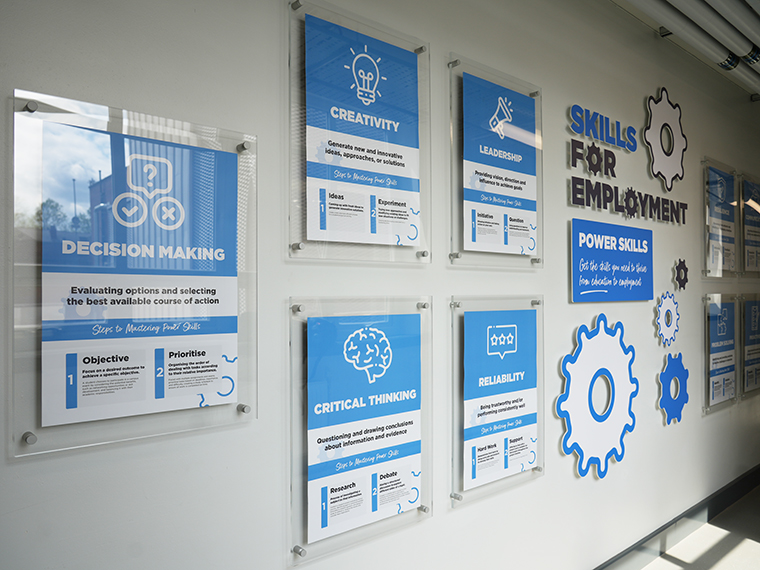
They’re skills that you can take with you from one job to another, from one industry to another and from education into the workplace. RNN Group’s Skills for Employment programme has been developed around ten of these skills.
What are Power Skills?
At RNN Group, the ten Power Skills are:
- Communication
- Creativity
- Critical thinking
- Decision making
- Leadership, adaptability and flexibility
- Problem solving
- Being proactive and showing initiative
- Resilience
- Self-management, being hardworking and reliable
- Time management
You might look at that list and think, “I already have some of those.” And you probably do.
You might have demonstrated communication by working with customers, giving a presentation or speaking to someone new. You could have shown problem-solving by finding a solution when something went wrong on your course or at work. Perhaps you’ve demonstrated resilience by making a mistake, learning from it and carrying on. These experiences all count.
The important thing is being able to recognise the skill, understand how you developed it and explain it to someone else.
Skills for Employment: Proving what you can do
This is where RNN Group’s Skills for Employment programme comes in.
The programme has been created with employers in mind, recognising that the skills needed in the workplace go beyond what can be measured in an exam or qualification.
Learners work towards developing the ten Power Skills and collect evidence to demonstrate how they have used them. For each skill, learners can showcase three examples, which are recorded through the Group’s system. They can then download a digital certificate showing the skills they have achieved.
That means you aren’t simply saying: “I’m good at communication.” You can actually show how you’ve demonstrated it.
For example, you might have helped at an open event and spoken to prospective students, communicated professionally through emails or telephone calls, or developed your confidence when speaking to employers.
Similarly, creativity might involve finding a different way to approach a task, while resilience could be demonstrated by dealing with a mistake, learning from it and getting on with the job.
These real examples can make a big difference when you’re talking about yourself to an employer.
Why do employers care about these skills?
Think about what happens in a real workplace. A customer might have a problem. A deadline might change. A colleague might need some help. Something might go wrong with a project. You might be asked to do something you’ve never done before.
Technical knowledge is important, but being able to think, communicate, adapt and respond is important too.
That’s why Power Skills can be useful across so many different careers. The same ability to communicate effectively could be useful whether you’re working in healthcare, engineering, construction, business, hospitality, education or one of the many other industries represented across RNN Group.
And these aren’t skills you have to wait until you’re employed to develop. You can build them now.
Careers and Skills Week is your chance to get started
Throughout Careers and Skills Week, you’ll have opportunities to find out more about careers, meet employers and take part in activities focused on employment and the skills employers are looking for.
Make the most of those opportunities: Ask questions or talk to employers about what they look for when recruiting; find out what different jobs are really like and take part in workshops. Think about the skills you already have and the ones you want to improve.
You could even ask an employer: “What skills make someone stand out when you’re recruiting?”
You might be surprised by the answer. Your skills can tell your story.
One of the most useful things you can do when preparing for employment is learn how to talk about your skills.
Instead of simply listing communication, teamwork and problem-solving on a CV, think about the experiences behind those words.
- What did you do?
- What challenge did you face?
- What did you learn?
- What was the outcome?
Those examples give an employer a much better idea of what you can actually bring to a workplace.
And that’s the thinking behind Skills for Employment – helping learners build transferable skills alongside their qualifications and have evidence to demonstrate them. You don’t need to have your whole career planned out: Perhaps you already know exactly what career you want, perhaps you’ve got three completely different ideas or perhaps you’re still trying to work out what you enjoy.
Whatever stage you’re at, Careers and Skills Week is an opportunity to take the next step.
Your career won’t be defined by one week, one qualification or one decision. It’s something you’ll continue to develop as you gain experience, meet people and learn more about yourself. So next week, get involved. Explore. Ask questions. Build your skills. Talk to employers. And don’t forget to recognise the skills you’re already developing along the way.
Your qualification can show what you’ve learned.
Your Power Skills can help show employers how you work.
And together, they can help you take the next step towards your future career.