
























Lenses, Not Labels
Building Stronger Intergenerational Workforces
For the first time in modern history, many workplaces now include employees spanning five generations.
Teams can include colleagues just starting their careers alongside others with forty years of professional experience.
This diversity of age and experience creates enormous opportunities – but also new tensions. Different communication styles, expectations around work, attitudes to technology, and definitions of leadership can easily lead to misunderstanding.
Too often, organisations respond by turning generations into labels.
“Older workers resist change.”
“Younger employees lack loyalty.”
“Mid-career professionals avoid risk.”
These narratives may sound familiar, but they rarely help. In fact, they often reinforce division rather than understanding.
The most effective organisations are beginning to shift away from generational labelling and toward generational lenses.
The problem with labels
Labels simplify people into stereotypes. Once we assign someone to a category, we start interpreting their behaviour through assumptions rather than curiosity.
A preference for face-to-face meetings becomes “old-fashioned.”
A request for flexibility becomes “typical younger worker behaviour.”
A cautious approach to new technology becomes “resistance to change.”
But people are shaped by far more than age:
- Life experience
- Culture
- Leadership exposure
- Personality
- Career stage
- Economic conditions
- Education
- Family responsibilities
Generational experiences influence people, but they do not define them.
When labels dominate workplace culture, collaboration suffers. People stop listening to individuals and start reacting to stereotypes.
Using generations as lenses
A more useful approach is to treat generations as lenses rather than labels.
A lens helps us understand context. It encourages empathy and interpretation rather than judgement.
For example:
- Someone who began their career during economic instability may value security and structure.
- Someone raised in a digital-first environment may prioritise speed, flexibility, and collaboration.
- Employees who experienced hierarchical workplaces may communicate differently from those used to flatter structures.
These differences are not problems to solve. They are perspectives to understand.
Using a generational lens encourages better questions:
- What experiences may have shaped this viewpoint?
- What assumptions am I making?
- How can we adapt our communication styles?
- What strengths does this person bring because of their experience?
This mindset shifts the conversation from conflict to curiosity.
Why intergenerational workforces matter
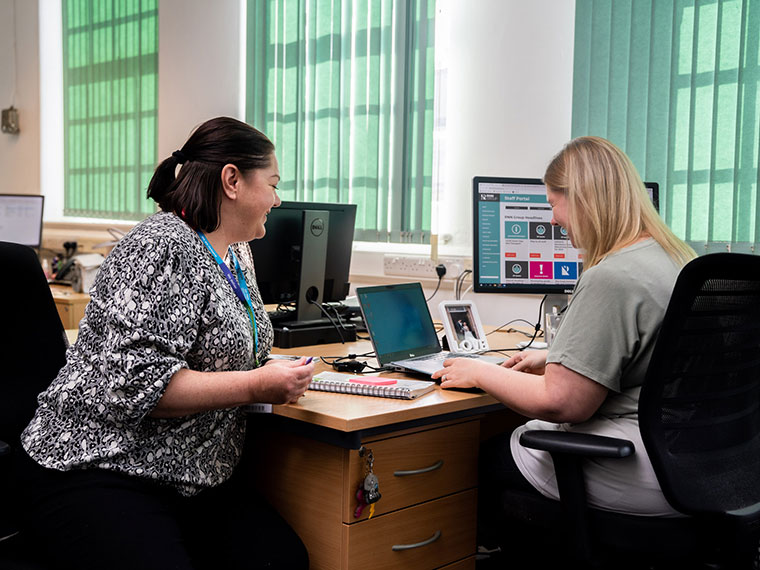
Age-diverse teams bring broader thinking, deeper resilience, and stronger innovation when they work well together.
Experienced employees often bring:
- Institutional knowledge
- Long-term perspective
- Judgement under pressure
- Relationship networks
Younger employees may contribute:
- Digital fluency
- Fresh perspectives
- Adaptability
- Awareness of emerging trends
Neither perspective is inherently better. The value comes from combining them.
Organisations that create environments where generations learn from each other tend to be more adaptive and more resilient.
Moving from tension to collaboration
Building stronger intergenerational workplaces requires intentional culture design.
That includes:
- Creating multiple communication styles rather than assuming one fits all
- Encouraging reverse mentoring and shared learning
- Designing flexible ways of working that benefit all ages
- Rewarding curiosity and adaptability
- Challenging stereotypes when they appear
Most importantly, it means recognising that workplace differences are rarely about age alone and that we have to adapt to new working trends. After all, if we did not, we would still be working 12-16 hour days, six days a week as many people in the UK did longer than 200 years ago and 50 hour weeks over 5-6 days around 100 years ago. Work patterns shift and we must shift with them.
The future of work is intergenerational
People are working longer. Careers are changing more frequently. Technology continues to reshape how work happens. As a result, intergenerational collaboration is no longer optional – it is a defining feature of modern organisations.
The organisations that thrive will not be the ones that become experts in generational stereotypes. They will be the ones that build cultures of understanding.
Because generations should help us see more clearly – not reduce people to categories.
The goal is not labelling, it is learning how to see through different lenses.